








In July, Google and Meta began forcing transparency on AI generated content. Now, Snapchat has stopped platforming content created entirely with AI, and the EU’s latest AI Act has forced Claude to add watermarks to content. Plus, with Google surfacing tools in AI Overviews, we explain how to create truly ownable content.
SEO
1. Google add /goto tracking parameters in search – destabilising tracking from third-party tools
Last month, Barry Schwartz posted an article to Search Engine Roundtable about reports of Google starting to test URLs with a new tracking parameter in search results. Yesterday, he updated that Derek Perkins from Nozzle had told him the instances of these URLs appearing had ramped up – it seemed likely that these URLs were being rolled out at scale.
It’s now been confirmed by a Google spokesperson that this is the case. They said:
“We have a long history of deploying technical measures against evolving forms of abuse, and we regularly take steps to protect our services and users.”
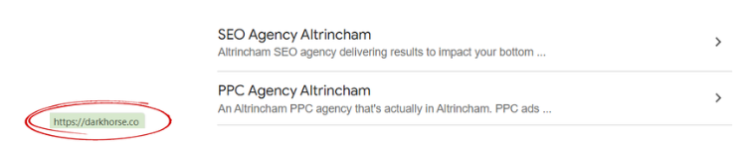
What does this mean?
When you click on a search result, instead of going directly to that URL, as seen here:
You’ll be sent to a passthrough URL like:
- https://google.com/goto?url=CAEStw[..}
Which re-directs to the website URL. We’ve been unable to replicate this so far.
Why does it matter?
Because these links can’t be decoded, this in practice prevents AI companies and tools from scraping search results. This has potential to disrupt keywords tracking across platforms, whilst they figure out a workaround – but the resources needed to follow the re-directing URLs could push up prices for AI and SEO tracking software.
Keep your eyes on your tools and be mindful that if something doesn’t look quite right, it could be caused by this change.
Sources: Search Engine Roundtable, Search Engine Roundtable
2. August 2026 Spam Update rolled out
A short and sweet spam update was rolled out in August, starting on the 18th and wrapping up by the 21st. This was the third announced spam update of 2026, with the last one rolling out in June. There was nothing notable about this update, with no new policy updates to take note of. However, SEOs are still noticing volatility continuing after the rollout concluded. Website owners who have experienced fluctuations should check they are compliant with existing spam policies.
Source: Google Search Status Dashboard
3. The EU’s latest AI Act triggers Claude to add watermarks to content
Growing tired of coming across AI slop? This policy move by Claude leaves less places to hide. In July, Anthropic signed the EU AI Act’s Article (50)2 Code of Practice on Transparency of AI-Generated Content (yeah, bit of a mouthful), and jumped to apply compliance measures in early August.
As of the 2nd of August, Claude started to:
- Embed AI-generated content with machine-readable watermarks
- Attach provenance metadata to supported file types (e.g. image formats)
This is being rolled out across existing Claude models, but will be present from day one of any new models – including across Claude Platform (API), Claude Code, and Claude Cowork.
They are working with third parties to help them understand how to detect these watermarks, meaning it’s probable that tools and search engines like Google will quickly be able to pick up where content has been passed through or generated using AI.
Of course, there are plenty of people who use Claude responsibly to refine and edit their content, rather than creating it from scratch. It remains to be seen how platforms will respond to being able to detect these watermarks, but it’s a big win in the battle for transparency.
Sources: Claude Support, Search Engine Land
4. Website owners have been seeing AI Overview follow up queries tracking in their Search Console data
Currently, follow up queries entered in AI Mode are tracked within Google Search Console as new queries – in practice, this means that redundant queries like ‘yes’, ‘no’, ‘tell me more’ are being tracked in Google Search Console properties.
As there is currently no baked-in way to filter out queries entered into AI Overviews or AI Mode within the general performance report, these are being included in the full data set.
So, is there any way to filter them out?
Yes, but it isn’t foolproof. SEOs have been using Regex for a long time to find long-tail conversational style queries which can be assumed to have been typed into AI Overviews/AI Mode, so logically, you can apply the same for short conversational fragments.
Simply head into your Google Search Console Performance report, click +Add Filter > Query > Custom (regex), and experiment with different expressions to filter these queries in or out of the data.
For example:
To find long-tail conversational queries
- Try this regex: ^(?:\S+\s+){9,}\S+$
- This returns queries over 10 words long
To filter out shorter, follow up type queries:
- Try this regex: ^(?!yes$|yeah$|yep$|yup$|no$|nope$|okay$|ok$|sure$|thanks$|thank you$|please$|great$|perfect$|exactly$|right$|correct$).+$
- This filters out common one word queries. You can adapt and change this to include other common affirmation phrases.
You could also use regex to filter out any one word responses, but this would likely remove data that you do want to see.
Source: Search Engine Roundtable
5. Google Search Console fixes data gap
Earlier in the month, Google Search Console showed a two day data gap across the 15th and 16th of August in the Crawl Stats report. This isn’t the first time gaps have appeared out of the blue, with the latest occurrence happening in October 2025.
Thankfully, this has been fixed now – so your reports should be back up to date.
Source: Search Engine Roundtable
Digital PR
1. Non-canonicalisation of multi-publication stories
After Reach Plc saying last month they will prioritise quality over quantity and reduce the volume of stories they will publish, it would have been understandable for PRs to worry about what this means for syndicated content and whether this was going to mean a significant decrease in stories being shared across multiple publications.
It turns out that concern is not necessary, as Reach does seem to still be publishing content across multiple titles. However, there’s one small (or, potentially, large) change. Rather than stories being simply republished word for word with a canonical tag linking it back to an original or definitive source, we’ve noticed single stories by the same journalist being published across multiple titles without a canonical tag, and some small changes in wording to prevent it being classed as entirely duplicate content.
The use of the canonicalisation tag is historically what helped distinguish a piece of coverage as syndicated, so without that, the article could theoretically be viewed as a standalone piece by search engines. PRs are still receiving the benefit of a syndication (one piece of coverage = many) but without having to definitively mark it as such. The small changes in wording across the articles could also suggest Reach is prioritising localisation or tailoring content to different audiences, rather than a straight up like-for-like syndication. PRs should take this into account when reporting on results, but be transparent with clients whichever way they decide to label the coverage. Time will tell as to whether this new way of distributing content by the news corp will become the norm.
Source: Reach Plc
2. Heatwave reactives
August once again brought another slew of hot weather, providing ample opportunity for brands to capitalise on this very topical (and very British) subject. However, given the increasing focus on what these extreme temperatures mean for the planet, wildlife, and human health and safety, we’re seeing the general gap for reactives moving from light-hearted tips on staying cool, sleeping or exercising in a heatwave, to more serious tones such as rising anxiety levels amongst younger generations and the very real effect of social inequality on health
Heatwaves have always been good fodder for reactive commentary, data or product promotion, but the time has come to stop and consider the underlying tone and message behind any pitches. Gone are the days when hot weather could be trivialised as simply an inconvenience needing to be solved or alleviated. PRs need to ensure they consider the wider media narrative and reader sentiment when pitching any hot weather stories, to avoid coming across as insensitive or leveraging a very real crisis for a quick product plug.
Of course, this applies to all reactive stories where possible. Just because you can, doesn’t always mean you should.
Source: Roxhill Media
3. Google introduces “preferred sources” button for publishers
Google has added a new feature enabling users to pick a newsbrand as a ‘preferred source’ in search results with one click while reading one of their articles. The feature gives users more control over which news sources appear in their search results, including for AI summaries. Users can curate the sources Google draws on for its Top Stories section, which includes snippets from news websites on articles related to key search terms, as well as for generating its AI Overviews and responses in AI Mode.
This is one of the very few AI search visibility levers that runs through your audience rather than through the algorithm. The strongest fit is for publishers, news heavy brands and anyone with a newsletter, a community or repeat readers, and the embed code is already in Search Central, so it is a genuine quick win rather than a project.
On its own, the button will probably not get clicked. Pair it with an explicit ask in newsletters, social and post purchase emails, and treat preferred source count as a reportable metric.
Source: Google
PPC
1. Google Ads adds reporting for AI-generated Product Titles
Google has rolled out a new Product Titles report in Google Ads that gives advertisers clear visibility into dynamic, AI-generated titles being served in Shopping campaigns. When Google’s AI determines an alternative title is more relevant to a user’s search query than the original feed title, it will automatically serve the AI-generated version. Advertisers can now track the performance of AI-customised titles directly against their original titles using metrics such as impressions, clicks, CTR, cost, and average CPC.
Instead of leaving marketers in the dark about how AI modifies copy, this report provides full visibility into how Google presents products to prospective buyers. Marketers can analyse high-performing AI titles (and their CTRs) to extract messaging insights and manually optimise their primary product feeds. Marketers need to monitor these reports closely to ensure automated copy remains aligned with brand guidelines whilst still leveraging AI to capture search relevance.
Source: Search Engine Land
2. Google tests channel prioritisation controls for Performance Max
Google is currently testing an alpha feature that allows advertisers to directly influence channel prioritisation within Performance Max campaigns. Instead of hard budget caps per channel, the new controls let marketers apply positive or negative adjustments to alter the target CPA the system will accept across Search, YouTube, Display, Discover, Gmail, and Maps. This update represents a major departure from pMax’s black-box model, giving advertisers their first direct lever to dictate channel allocation rather than relying purely on automated bidding decisions.
This means marketers can now actively curb unwanted spend on underperforming channels (like Display or Maps) and push budget towards high-converting channels like Search without exiting pMax. Following the rollout of channel-level reporting, advertisers can finally take those performance insights and directly influence algorithm behaviour rather than just observing the data.
Source: Search Engine Land
3. ChatGPT Ads adds automated bidding, platform targeting and view-through tracking
ChatGPT Ads has introduced an automated bidding strategy that dynamically adjusts bids to deliver the highest possible volume of conversions within a specified campaign budget. Advertisers can now target specific operating surfaces; choosing between iOS app, Android app, or Web to match campaign delivery with user behaviour across devices. The platform has added one-day view-through conversion tracking alongside a WorkMagic integration to pass conversion signals directly via the Conversions API.
Marketers can move away from manual bid management and rely on algorithmic optimisation focused directly on bottom-funnel performance goals. Platform controls allow brands to isolate low-converting surfaces and focus ad spend purely on the OS or device type that offers the highest ROI. View-through tracking gives clients better visibility into how exposure on ChatGPT drives off-click conversions, though marketers must carefully separate these from direct click-throughs when assessing real channel incremental lift
Source: Search Engine Land
4. Google unifies Google Tag and Tag Manager, adds no-code event tracking
Google is upgrading standard Google tags into full Google Tag Manager (GTM) containers, merging both systems into a single, unified measurement infrastructure. Marketers can now set up custom event tracking and conversion goals visually by clicking directly on website elements, bypassing manual code writing. The update introduces direct data sending to Google destinations (reducing JavaScript latency) along with a redesigned GTM dashboard featuring visual mapping of data flows.
Clients without dedicated developer support can easily configure, test, and maintain custom conversion events without relying on developer timelines. Direct data transmission reduces page script overhead, improving page-load performance and lowering conversion tracking drop-off. Whilst basic setups benefit immediately, agencies and enterprise marketers with complex GTM containers should carefully preview and test Google’s optional “container optimization” changes before deploying them to live environments.
Source: Search Engine Land
5. Google auto-upgrades eligible Search campaigns to AI Max
From 1 September 2026, Google is automatically converting Search campaigns that use Automatically Created Assets (ACA) or campaign-level broad match settings over to its “AI Max for Search” framework. Upgraded ACA campaigns will automatically have both Search Term Matching (query expansion) and Text Customisation (AI ad copy) enabled by default. Enabling Search Term Matching allows Google’s AI to trigger ads on search queries far beyond an advertiser’s explicit keyword list, effectively treating phrase and exact match keywords like broad match.
Exact and phrase match keywords will no longer act as strict guardrails; without proactive changes, accounts risk wasting ad spend on highly irrelevant, broad user queries. AI-generated ad headlines and descriptions could bypass carefully crafted copy unless campaign settings and asset pinning are actively managed. Marketers must audit accounts immediately to either turn off ACA/campaign-level broad match settings to opt out entirely, or heavily strengthen account-level negative keyword lists to constrain Google’s AI expansion.
Source: Search Engine Land
Paid Social
1.Meta adds dedicated ad exclusion audiences
This month, Meta added an option to create exclusion only custom audiences for Meta ad sets, providing another way to omit specific people from ad targeting in the app, unlike a regular custom audience which can be used for both inclusion and exclusion.
Meta said the feature can be used to ensure people who’ve opted out of a business’s products or services no longer see those promotions, both to reduce wasted ad spend, and exclude people a business has a legal or regulatory obligation not to target. The option also works as a permanent guardrail against accidental inclusion, and once created, an exclusion only audience cannot be converted into a regular custom audience.
Since paid social managers can now build permanent, standalone lists (opted out customers, employees, restricted groups) that can never accidentally be flipped into an inclusion audience, there is a reduced risk of budget being spent on people who should never be targeted. In the same breath, compliance and legal exposure becomes easier to manage, particularly for regulated industries (finance, gambling, medical, alcohol) where certain groups legally cannot be targeted.
For marketers managing several campaigns or brands, this also strengthens account hygiene. Exclusion only lists, such as staff or competitors, can be set up once and left as a standing safeguard across all campaigns, cutting down on the manual re-checking that was previously needed every time a new custom audience was built.
Source: Social Media Today
2. Meta removes option to exclude ad placements
Meta is removing the Placements option from ad sets, meaning advertisers will no longer be able to exclude specific Meta placements such as search results or in-stream ads between Reels. The company is pushing advertisers towards expanded placements so its automated system can choose the most responsive display options for each promotion.
They’ve also removed the option to exclude platforms as well, meaning the system will be able to display ads from any campaign across any of Meta’s apps, based on its own performance assessment rather than advertiser preference.
This is described as another step towards Meta’s longer term vision of fully automated ad campaigns, where advertisers eventually only need to enter a URL, connect a bank account, and let Meta’s AI handle creative, targeting, and placement decisions entirely.
Manual placement strategy becomes largely obsolete on Meta, since paid social managers will lose the ability to steer spend away from underperforming or brand unsafe placements such as certain in-stream slots or search results, shifting control almost entirely to Meta’s algorithm.
This is another sign that reporting and optimisation skills will need to shift from placement level decisions towards creative and audience inputs.
Source: Social Media Today
3. TikTok expands public placement opportunities for advertisers
TikTok has expanded its Out of Phone promotion option, which lets brands display TikTok content beyond the app on billboards, in-store displays, cinema promos and more. The programme was launched in 2023 and previously expanded through a partnership with Vistar Media earlier this year. TikTok is now adding new placement partners including Alight Media, DooH it, Powerpill, Zoom Media, Next-Gen Media and C-Screens, significantly expanding its real world presence across the UK, France, Belgium, Spain, and Italy. Marketers can also include user-generated content within these placements, alongside TikTok’s existing generic display option via its deal with Atmosphere, which streams curated TikTok content on screens in restaurants, bars, and gyms.
This gives paid social managers a new way to extend the reach and lifespan of high-performing TikTok content beyond the app, effectively turning organic or paid social creative into out of home media without a separate production budget. Campaign planning may need to expand beyond in-app metrics, since success in these placements will be harder to measure through standard TikTok Ads Manager reporting and may require coordination with out of home measurement partners or brand lift studies.
Source: Social Media Today
4. Snapchat no longer rewards fully AI-generated Spotlight content
Snapchat has adjusted its recommendation systems so that only videos created by real people are eligible for Spotlight recommendations, taking a stance against fully AI generated content. Creators can still use Snapchat’s AI creative tools to enhance or edit their content, but fully AI generated videos will no longer be surfaced or rewarded. This builds on Snapchat’s broader efforts to keep Spotlight focused on authentic, human made content, following an earlier update in April that reduced visibility of AI generated posts. Snapchat framed the move as protecting original perspectives and personal storytelling.
This follows a wider industry pattern of platforms cracking down on low quality AI content, including LinkedIn’s new AI slop reporting button, Substack’s tool to flag AI written newsletters, YouTube’s clarified monetisation rules against inauthentic content, and Meta’s removal of a controversial AI photo editing feature on Instagram. It reinforces a broader platform wide shift, where paid social managers should expect similar authenticity requirements to spread across other platforms, and may want to review creative production processes now to ensure AI assisted content is not fully AI generated in a way that risks reduced reach or flagged content later.
Source: TechCrunch
AI Search
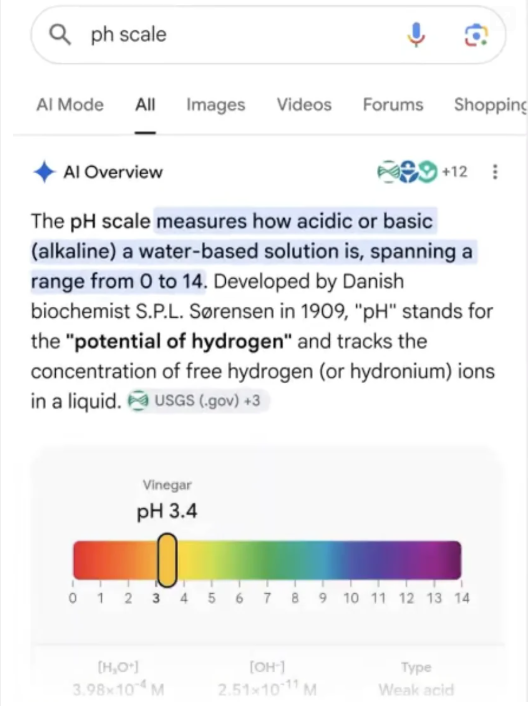
1. Generative UI starts appearing inside AI Overviews
Google has begun rolling generative UI into AI Overviews, having launched it in AI Mode last November. It builds custom layouts, interactive tools and simulations on the fly, matched to the question (a mortgage calculator, an interactive diagram, a comparison table). It’s already live globally in English in AI Mode, but Google has not said when the AI Overviews rollout will complete.
This means any page that earns traffic mainly because of an embedded tool or calculator now competes directly with the results page
Start by identifying every page that ranks because of a tool rather than the content around it; those are the exposed ones. You can defend your clicks with a version of a tool Google cannot rebuild in a box, so saved results, logged in data, quoting, personalisation or genuine proprietary inputs. Tool pages are now shifting from traffic assets to brand and citation assets. Judge them on mentions and assisted conversions, not sessions
Source: Search Engine Journal
2. Reddit lost 86% of its ChatGPT citation share in under a week
Reddit accounted for 3.83% of ChatGPT Search citations between 18th July and 7th August. That fell to 0.52% between the 14th and the 17th August, a drop of 86.4%. No cause has been identified yet. The first drop lines up with ChatGPT running more background queries to specific sites, the second is still unexplained
AI visibility can move sharply in days with no announcement, no dashboard and no explanation; any AI visibility strategy resting on one platform or one source type is fragile by design. Report AI visibility as a trend across several engines, not a single monthly figure, or you risk explaining noise as performance. Reddit is still worth investing in as brand evidence and demand insight, but it’s a poor standalone citation tactic. Spread earned coverage across several credible sources instead.
Source: Search Engine Journal
3. Google swapped the model behind AI Mode with no formal announcement
Gemini 3.7 Flash arrived in AI Mode on 14th August, one day after the model became generally available. It rolled out globally in English, starting with Google AI Pro and Ultra subscribers. Google says it improves instruction following and intent understanding. No ranking system changed and no core update was confirmed. It was announced by a Google employee on X rather than through Search Central or the Search Status Dashboard.
Volatility inside AI answers is often a model change, not a ranking change, so do not report it to clients as one; the engine writing the answer above your listing can change entirely without any of the usual notice. We advise you annotate model changes on AI visibility charts exactly as you would annotate a core update. Rerun your prompt set after each one before drawing any conclusions.
Source: Search Engine Land
Onions? Known. With Dark Horse at your back, you’ll be ready for whatever change awaits.