









The march of AI across PPC, Paid Social and SEO continues in 2026, whilst Beckham-gate took over much of the pop culture news cycle, a reminder of how the speed of your reactive PR impacts the coverage you receive. Whilst Threads overtakes X for the first time in daily mobile visits, Meta continues to expand its paid subscription offering. And we take a look at the impact of Australia’s teen social media ban – has it really been effective?
Skip to:
SEO
1. Agentic shopping is coming to a search results page near you
This is a biggie. Google announced the launch of the ‘Universal Commerce Protocol’ (UCP) earlier in the month, which is essentially an open standard for agents that will ultimately allow merchants to make it possible for users to purchase directly from search, AI Mode, and Gemini.
This will turn search into its own e-commerce ecosystem. Traffic will decrease further to websites since fewer users will need to visit them to complete their purchase, but it could result in more frictionless purchases from users.
Now is the time to get your ecommerce SEO, full funnel tracking, and merchant listings in order – don’t let your competitors win this one.
Source: Google Ads & Commerce Blog
2. Google are pushing searchers out of search results and directly to AI Mode
On 27th January, Google rolled out a global change to AI Overviews on mobile that squashes ‘traditional’ organic results even further. When a user clicks ‘Show more’ in the AI Overviews result, they are taken directly out of search into a pop up – meaning once you interact with the result, you can no longer scroll past it.
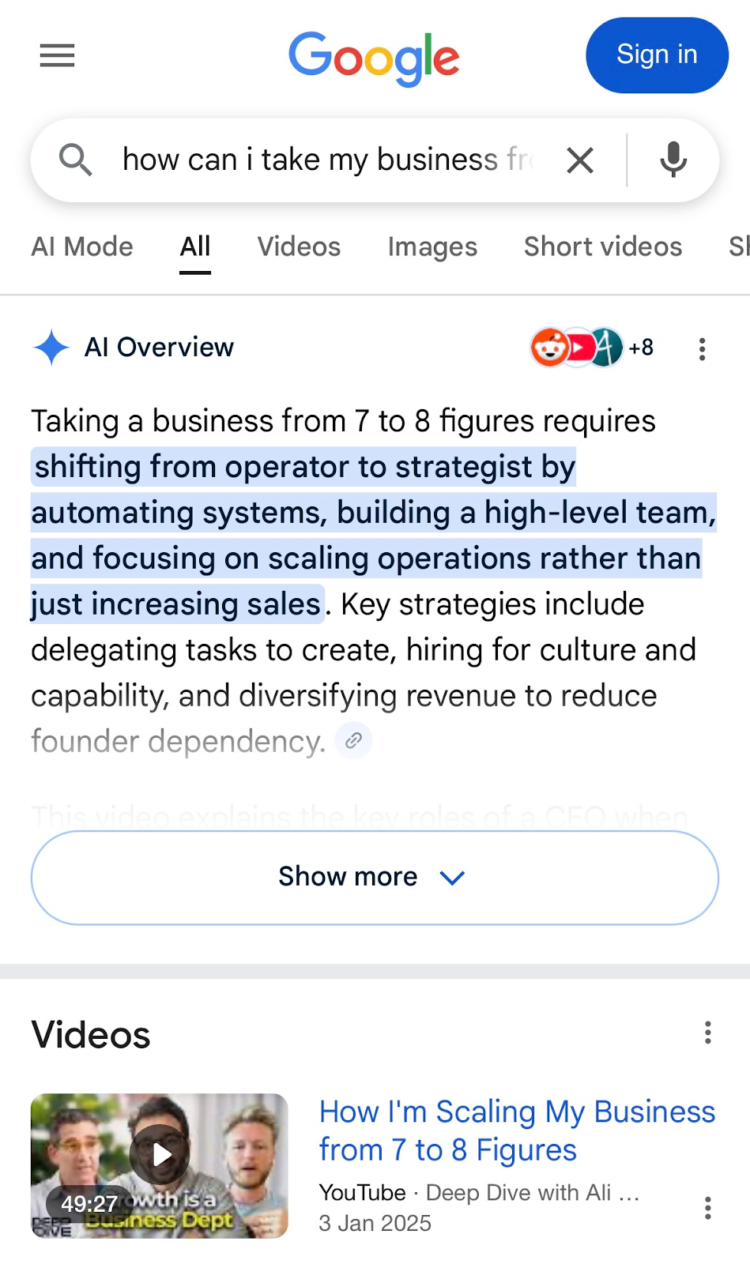
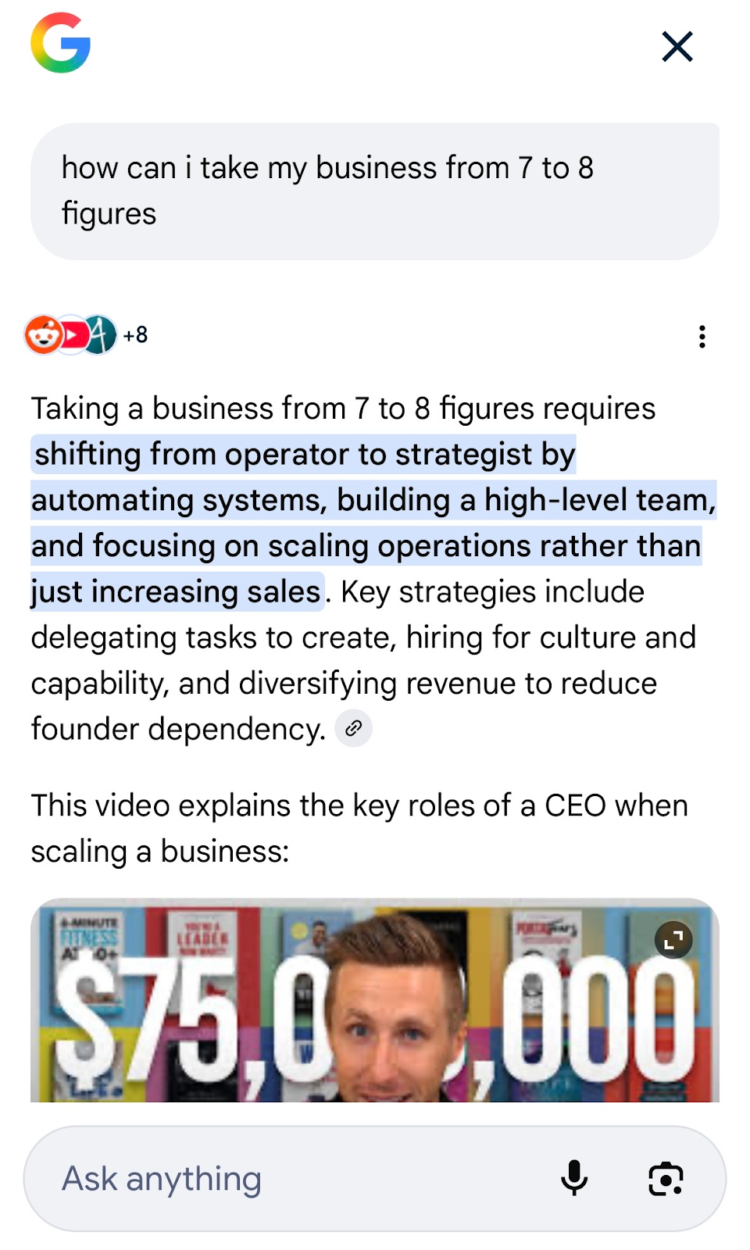
From here, searchers can either click out of the pop up, or ask a follow up question. Doing this takes them to AI Mode.
Google has done this in the name of “making the transition to a conversation even more seamless”. In reality, this takes more traffic away from publishers and into AI Mode, at a time where it’s in the process of being monetised. What a coincidence.
The bottom line is that this will result in fewer clicks through to the websites who are providing Google with the information that they are using to inform AIO’s and AI Mode.Website owners should talk to their SEO agency about the potential impact of this.
Source: Search Engine Land
3. Google is rolling out an update to their Trends Explore page
Google Trends is a well utilised, valuable tool for identifying trending search topics. It makes it possible to compare your own data against what is happening in the bigger picture, whether you’re a conveyancing solicitor or you sell plant pots.
The new interface is powered by Gemini, offering features like a ‘suggest search terms’ button, the ability to compare more search terms at once, and expanded ‘top’ and ‘rising’ keyword lists.
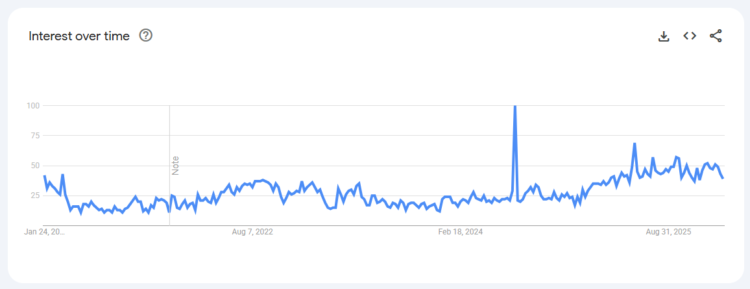
However, it does look like a couple of key features have been removed in the process, with the export button on the ‘interest over time’ graph missing in the promo video they released earlier in the month.
Current Trends ‘interest over time’ graph
New Trends ‘Interest over time’ graph
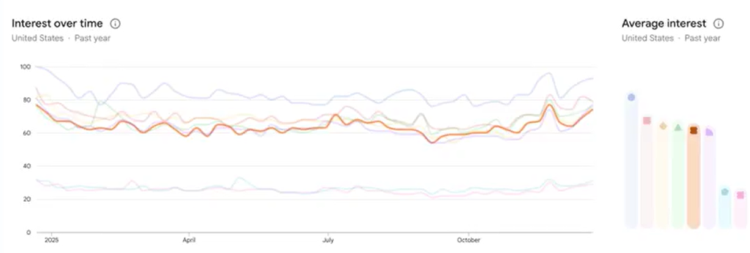
This is being rolled out gradually, only time will tell whether all features from the existing platform will be retained, or if Google is intentionally removing access to this data.
Source: Google Search Central
4. New data shows trends in AI Overview visibility
More news on AI Overviews comes off the back of a study conducted by SEMrush. Examining 10 million keywords, they discovered that visibility of the overviews peaked to around 25% by mid-year, before declining to less than 16% by November.
Some key findings from this study include:
- Paid ads are becoming more common in AI Overviews – unsurprisingly
- A notable increase of AI Overview appearance for commercial queries (8% to 18%), transactional queries (2% to 14%), and even navigational queries (<1% in January to over 10% in November)
Website owners and publishers should expect more volatility as this evolves – you’ll be able to see these trends reflected in your own data for areas that have high AI Overview presence.
Source: Search Engine Land
Digital PR
1. The Beckham drama – part 1
Eldest heir to the Beckham name took to his Instagram story to air dirty laundry following a break up from his parents. In the lengthy post, he stirred up opinions and memes with accusations that his family had mistreated his wife and that his mother had behaved inappropriately at his wedding.
The Beckham and Peltz families will undoubtedly each sit behind a team of PR masterminds; every new movement in the drama will be to create opportunity or to manage the image of either side.
Brooklyn Beckham seems to, in one sense at least, have won the war, having gained 975,144 Instagram followers since the story went live. His total now stands at 17 million followers.
Nicola’s also benefitted from the public dressing down of Sir David and Lady Beckham, with her IG follower count increasing by just over 10% (from 3,164,090 to 3,481,671), although that still leaves her with the smallest following of 3.5 million.
The Beckham family patriarch still saw a swell of online support, but with the fewest new followers (52,769). Although, he retains his crown as the most followed Beckham, with a grand total of 88.6 million followers.
Victoria also saw an increase, although a less exciting amount of 144,426, she still remains the second most followed with a total of 33.6 million followers.
Source: BBC
2. The Beckham drama – part 2
Big news gives way to big opportunities for those in the PR industry and social space. Unsurprisingly, in the wake of Brooklyn’s bomb shell IG story, social platforms flooded with speculative commentary and creators poking fun at any and every aspect of the drama.
But it’s not just social media marketers that should be grabbing opportunities like this when they come up. PR reactives to this kind of story are a great way to ride the wave of news stories to secure coverage.
The most important thing to note when riding the wave of trendy news stories is to act fast. The news cycle is famously fickle, and within 24 hours, it could be too late. In the case of the Beckham family feud, it re-entered the news cycle with every move made by either side, so being constantly ready to amend and outreach at a moment’s notice could give your efforts a second wind.
Source: Hello!
3. PR trade bodies campaigning against fake experts
The Chartered Institute of Public Relations (CIPR) and the Public Relations and Communications Association (PRCA) have called for journalists to be more vigilant with the expert commentary they receive. This follows months of investigating experts in the media and finding a rise of ‘fake experts’ within niches from psychiatry to Royal cleaners.
Sarah Waddington, CEO of the PRCA, says this practice ‘is damaging for both journalism and public relations because it undermines trust at every stage of the information chain’. Following this campaign, Press Gazette named and shamed the worst known ‘fake experts’.
It’s a non-negotiable for PRs that expert commentary is attributed to real people within the industry they represent. This is true not just to maximise the likelihood of coverage but to protect the brand authority for your brand or client. Using fake experts has always been risky and morally questionable, but in the wake of this campaign, it would also be reduced to foolish.
Source: Press Gazette
PPC
1. Google Ads adds a centralised Experiment Center
Google launched a centralised Experiment Center to help advertisers test and measure campaign strategies in one place. Instead of hunting around for A/B tests and lift studies across different menus, you can now run, compare, and analyse them from one hub.
At face value this is a small change. It’s made important because the platform is automating more of the optimisation decisions. Being able to validate changes before you scale spend takes some of the guesswork (and panic) out of big strategic choices.
Source: Search Engine Land
2. New Campaign Mix Experiments beta lets you test strategy whole account style
Google rolled out Campaign Mix Experiments in beta. This feature lets you test different combinations of campaign types, budgets, and settings together, rather than just within one campaign.
If you’ve ever wondered whether your Search and Performance Max campaigns should work together or separately, this is your ticket to actually testing it with data. It turns strategic questions that used to be guesswork into something measurable.
Source: Search Engine Land
3. Manual CPC is easier to find again
Google made Manual CPC simpler to access during campaign setup. Instead of hiding it behind recommended bidding paths, “Manually set bids” now appears more clearly in the UI under conversion focused goals.
A small change that’s a big win for those who still value control over automation. You can still let smart bidding work when it makes sense, but now you don’t have to jump through hoops to choose manual bidding when you don’t want the machine steering everything.
Source: Search Engine Land
4. Performance Max gets one-click creative preview
Google introduced a quick, one click preview feature for Performance Max asset groups. Now you can view how your ads will appear across placements without navigating deep into the UI.
Another small update that speeds up a slow task. When you’re juggling dozens of creative variations, this accelerates workflows and reduces those “does it actually look like that?” moments.
Source: PPC News Feed
5. Google Ads Billing Reports add more invoice transparency
Google rolled out a new Billing Reports section inside Google Ads. It gives a line‑by‑line breakdown of invoices, including usage and payment details by date range and account.
This is one of those updates that feels boring until you need it. For agencies and finance teams, this means fewer spreadsheets and less guesswork on reconciling spend. When budgets are tight, knowing exactly what you are paying for and when matters. Make the pennies count.
Source: PPC News Feed
Paid Social
1. TikTok adds more control options to Smart+ campaigns
TikTok has enhanced its AI-powered Smart+ campaigns by adding an Auto-select creative tool that scans existing ads and eligible creator content to recommend the best-performing creatives based on campaign goals. Advertisers can now preview every possible creative combination within TikTok Ads Manager before campaigns go live, improving visibility, error-checking, and approval workflows. TikTok has introduced more manual control features into Smart+ workflows – such as duplication, draft mode, automated rules, and bulk editing – bringing aspects of traditional ad management into these automated campaigns.
Marketers can rely more on TikTok’s AI to identify strong performing creative, reducing the need to manually test every variation and allowing campaigns to scale more efficiently with less day to day input. Improved preview functionality gives marketers greater visibility before launch, helping maintain brand consistency, strengthen quality control, and avoid unsuitable creative combinations going live.
The added manual controls allow marketers to combine automation with human oversight, making it easier to test, optimise, and adjust Smart+ campaigns.
Source: Social Media Today
2. Meta expands its premium subscription test
Meta has begun testing premium, ad-free subscription options for Instagram, Facebook and WhatsApp in the UK that let users pay to remove ads while non-paying users continue to see ads as usual.
The roll out began in late 2025, but these premium subscriptions are now expected to offer additional features or capabilities that go beyond the standard free experience, although exact details may vary by platform and are part of the testing phase.
The move to test paid options reflects broader industry trends as social media companies explore alternative monetisation methods amid pressure on ad revenue growth.
It’s likely only a relatively small percentage of users will choose to pay extra for an ad free experience, meaning the overall impact on reach may be limited in the short term and Meta platforms will remain highly valuable for advertisers. However, there’s a growing need to diversify ad spend across platforms to compensate for potential reductions in reach on Meta properties while still leveraging their large user base.
Source: SBC News
3. Threads edges out X in daily mobile users, new data shows
Threads, Meta’s text-centric social app, has overtaken X in daily active mobile users worldwide, according to data from analytics firm Similarweb. As of early January 2026, Threads logged more daily mobile users on iOS and Android than X. This shift in mobile usage reflects Threads’ growth driven by integration with Meta’s broader ecosystem (notably Facebook and Instagram), rapid feature rollouts, and a focus on creator-friendly tools that boost conversation and engagement.
However, while Threads now leads on mobile, X still commands far more web traffic and remains influential in real-time discourse, particularly around news and politics.
The growth of Threads offers an opportunity for advertisers to reach mobile-first audiences in spaces beyond traditional social feeds. Marketers may need to adapt their creative approach to suit Threads’ more conversational, text focused environment, prioritising concise messaging and community style engagement over traditional image or video led ad formats.
Given that X still leads in web usage and real-time discussions, brands should avoid viewing this shift as a binary replacement and instead consider multi-platform strategies that balance Threads’ mobile reach with X’s strengths in broader topical conversation and desktop engagement
Source: TechCrunch
4. Is Australia’s teen social media ban actually working?
The Australian government reports that more than 4.7 million accounts believed to be operated by under-16s have been deactivated or restricted since the social media age-minimum laws came into force, although this figure mainly reflects accounts removed rather than actual usage changes.
Early signs indicate that many Australian teens are continuing to use their preferred social platforms through workarounds such as VPNs, alternate accounts, or desktop access, calling into question how effective the ban has been at meaningfully reducing overall usage.
There’s no clear data yet showing whether the ban has achieved its broader goals around wellbeing or reduced harmful effects, and many teens appear indifferent, continuing to find ways to stay connected despite the new rules.
Ad planners should be cautious about assuming a sharp decline in teen audiences on major social platforms in Australia, as early signs suggest many younger users are still finding ways to remain active despite the ban.
With Goa and Andhra Pradesh in India reportedly exploring similar measures, marketers should closely monitor behavioural shifts and platform usage trends across markets to avoid misallocating budgets or relying on outdated audience assumptions.
The wider debate highlights the growing importance of compliance and responsible advertising, with brands needing to stay alert to changing regulations that could impact age based targeting, data reliability, and audience measurement globally.
Source: Social Media Today
The work is never completed. You’d need eyes in more than just the back of your head to keep on top of all the changes across performance marketing each month. Get the best in the North West to do it instead. A free SEO audit, PPC audit, or Paid Social audit can help find the space for you to take advantage.